
Egocentrism
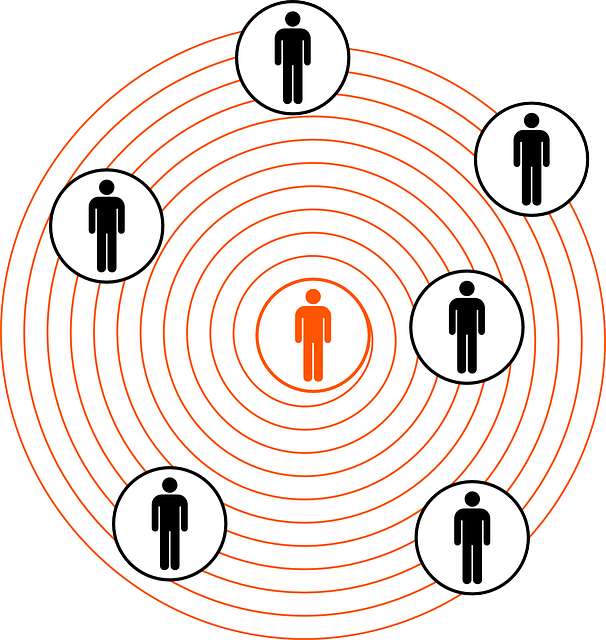
Egocentrism is a lifelong tendency to view the world from one's own perspective.

Alexey Parygin · CC BY-SA 4.0
Egocentrism is the tendency to view situations primarily from one’s own perspective and to have difficulty understanding or considering the perspectives of others. It is found across the life span: in infancy, early childhood, adolescence, and adulthood. Although egocentric behaviors are less prominent in adulthood, the existence of some forms of egocentrism in adulthood indicates that overcoming egocentrism may be a lifelong development that never achieves completion.
- field
- Developmental psychology
- known_for
- Tendency to view situations from one's own perspective; difficulty understanding others' perspectives
Lore & Background
During infancy, egocentrism refers to the infant's inability to differentiate between self and world, a key feature of Piaget's sensorimotor stage. This is not about learning that thoughts, values, or behaviors differ from others—that describes theory of mind, which is the understanding that others have thoughts, beliefs, and perspectives different from one's own. Piaget explained that egocentrism during infancy does not mean selfishness or egotism, but rather a lack of differentiation between self and world. During childhood, Jean Piaget developed a theory describing stages of cognitive development, claiming early childhood is a time of pre-operational thought characterized by an inability to process logical thought. Piaget identified centration, a tendency to focus on one aspect of a situation, with egocentrism being a particular type. He conducted the mountains study, where younger children before age seven could not appreciate a viewpoint different from their own. However, the mountains test has been criticized for judging only visuo-spatial awareness, and a follow-up study involving police dolls showed even young children could correctly identify what an interviewer would see, suggesting Piaget may have overestimated the extent of egocentrism in children. During adolescence, David Elkind identified the presence of egocentrism, noting that adolescents are primarily concerned with themselves and assume others are as obsessed with their behavior as they are. Elkind created terms for adolescent egocentric behaviors, including the imaginary audience and personal fable (which encompasses invulnerability).
Reader's Guide
Egocentrism is a foundational concept in developmental psychology, studied extensively by Jean Piaget and later by David Elkind. Piaget's work established egocentrism as a key obstacle to logical thought in early childhood, particularly through his mountains study, though subsequent research has questioned whether his methods fully captured children's abilities. The concept remains significant because it highlights the lifelong challenge of overcoming an initial egocentric perspective; adults appear less egocentric than children primarily because they are faster to correct from an initially egocentric perspective, not because they are less likely to adopt one. Elkind extended the study of egocentrism to adolescence, identifying unique manifestations such as the imaginary audience and personal fable. The concept also connects to theory of mind development, as shown in false-belief tasks where children younger than four demonstrate egocentric thinking by assuming others share their knowledge. Egocentrism is distinct from selfishness or egotism, referring instead to a cognitive limitation in perspective-taking that persists across the lifespan.
Did You Know?
- Egocentrism is found across the life span: in infancy, early childhood, adolescence, and adulthood.
- Adults appear less egocentric than children because they are faster to correct from an initially egocentric perspective, not because they are less likely to initially adopt one.
- Piaget's mountains study has been criticized for judging only visuo-spatial awareness, and a follow-up study involving police dolls showed even young children could correctly identify what an interviewer would see.
- David Elkind created terms for adolescent egocentric behaviors, including the imaginary audience and personal fable (which encompasses invulnerability).
Gallery


Frequently Asked Questions
Who is Egocentrism?
Egocentrism is a concept in developmental psychology describing a person's habitual habit of interpreting the world through their own lens. It reflects a struggle to genuinely step outside oneself and see how others experience the same situation.
What are Egocentrism's powers or role?
Its core ability is filtering every event, conversation, or conflict through the individual's own point of view. This makes it hard for the person to accurately grasp what another individual is thinking, feeling, or perceiving.
How does Egocentrism's story end?
It never truly resolves. While its most visible forms fade after childhood and adolescence, subtle traces persist into adulthood, suggesting that fully shedding egocentric thinking is an ongoing developmental task with no final chapter.
Why is Egocentrism important?
It serves as a key marker for tracking cognitive and social growth across the entire lifespan. Understanding it helps psychologists and educators recognize where a person stands in their journey toward genuinely empathetic, multi-perspective thinking.
When does Egocentrism first appear?
It is observable as early as infancy and remains a prominent feature throughout early childhood and adolescence. Its presence across every life stage signals that perspective-taking is a skill that develops gradually rather than switching on at a single milestone.
More in Psychology 1-21
Spotted an error? Know more?
This is a living reference — every entry is fact-audited, and reader corrections feed straight into our audit queue. Suggest an edit · See this site's audit record